
 Inquiry

 English
 Français
 Español
- Type:
- Industry News
- Date
- 2026-Jul-17
Industry News
Where Should A Swinging Outdoor Dog Gate Be Installed?
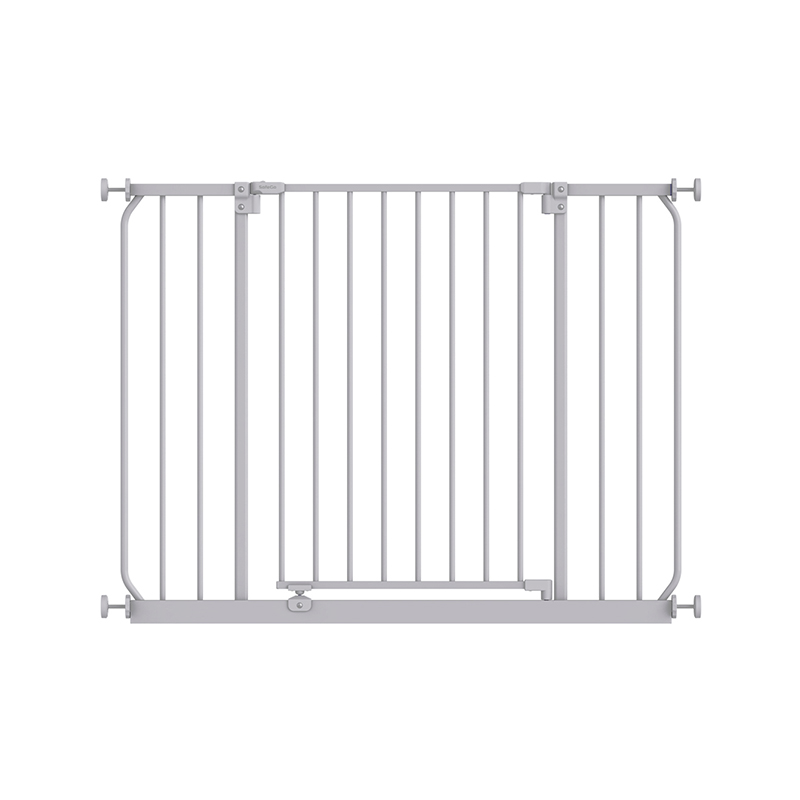
Yard layout decisions matter more than most pet owners realize when planning containment, and a swinging outdoor dog gate placed in the wrong spot can undermine even the best hardware specification. Installation location shapes everything from durability to daily convenience, which is why contractors and homeowners weigh this decision carefully before mounting hardware into fence posts or deck framing.
Fence Line Gaps And Access Points
Most installations happen along an existing fence line, at the exact point where a gap needs controlled access rather than a permanent barrier. A swinging outdoor dog gate mounted here typically attaches to two fence posts, with hinge hardware bearing the ongoing stress of repeated opening and closing across months of daily use. Which post material holds up best under this repeated stress? Pressure-treated wood posts generally accept mounting hardware more securely than untreated lumber, since treated wood resists the swelling and splitting that repeated screw tension can cause around a hinge plate over time.
Are gate width specifications different depending on fence gap size? Wider gaps intended for mower or cart access sometimes require a swinging outdoor dog gate built with reinforced hinge hardware, since a wider gate panel places more leverage stress on the hinge side than a narrower pedestrian-width gap would under identical wind or impact conditions.
Deck And Patio Transition Points
Homeowners with raised decks often install a swinging outdoor dog gate at the top of exterior stairs, preventing a dog from descending unsupervised while still allowing adults to pass through easily. Where does this application introduce different mounting challenges than a standard fence line installation? Deck railing posts vary considerably in spacing and thickness compared to fence posts, and a gate designed for standard fence dimensions sometimes needs bracket adjustment or spacer hardware to fit properly against deck railing that was not originally built with gate mounting in mind.
Who typically handles this kind of custom-fit installation? Contractors familiar with deck construction usually manage bracket adjustments more efficiently than a homeowner attempting a first-time installation, since matching gate swing clearance to stair width requires accounting for both the gate's resting position and its full arc of motion without the panel striking a railing baluster during use.
Side Yard Passage Restriction
Narrow side yards connecting a front and back property section represent another common installation point for a swinging outdoor dog gate, particularly in suburban properties where a side passage doubles as both a dog containment boundary and a utility access route for trash bins or garden equipment. Which hardware feature matters most in this narrow-passage application? Self-closing hinges become particularly valuable here, since a side yard gate left open even briefly creates a direct escape route toward the front yard and street, a risk that matters more in this location than along an interior fence line separating two already-contained yard sections.
Pool And Water Feature Boundaries
Properties with pools or water features sometimes incorporate a swinging outdoor dog gate as part of a broader containment strategy, restricting a dog's access to pool decking without blocking human foot traffic entirely. Where do local safety codes influence this installation? Pool barrier regulations in many jurisdictions specify minimum gate height and self-latching requirements, and a gate selected for this application needs to meet those code requirements in addition to its primary function of managing pet access, since pool-adjacent installations often face closer regulatory scrutiny than a standard yard fence gap would.
Garden And Planting Bed Protection
Gardeners managing raised beds or vegetable plots frequently install a swinging outdoor dog gate around a garden perimeter rather than along the property's outer fence line, protecting planted areas from digging or trampling while still allowing the gardener easy access during planting and harvest seasons. Does this application call for a different swing direction than other installations? Garden gates often swing inward toward the protected bed rather than outward, since inward swing keeps the gate panel from obstructing a walkway on the yard side, a detail that matters more in tighter garden layouts than in open yard installations where swing direction has less practical consequence.
Weather Exposure Across Installation Sites
Regardless of specific placement, a swinging outdoor dog gate installed outdoors faces sun, rain, and temperature swings that an indoor gate never encounters, and installation location partially determines how much weather exposure the hardware receives. Where does shaded placement extend hardware life most noticeably? Gates positioned under deck overhangs or mature tree canopy tend to show slower UV degradation on plastic components and slower corrosion on metal hinges compared to gates installed in fully exposed, south-facing yard positions that receive direct sun for most of the day.
Related products



Hangzhou Yiyuan Household Products Co., Ltd.
Product Center
Contact Us
- +86-15268686909
- [email protected]
- Room 1303, Tianyue Times Building, No. 750 Fengqing Road, Gongshu District, Hangzhou, Zhejiang, China
Copyright © 2025 Hangzhou Yiyuan Household Products Co., Ltd. All Rights Reserved.

Baby Safety Pen & Pet Gate Factory