
 Inquiry

 English
 Français
 Español
- Type:
- Industry News
- Date
- 2025-Oct-14
Industry News
When Did the Extra Tall Pressure-Fit Pet Stair Gate Appear?
Safety products for pets and children have evolved over the years, and one of the useful innovations is the extra tall pressure-fit pet stair gate. This type of gate provides both height for added containment and convenience through a non-permanent pressure installation. But when did it appear, and how did it become popular?
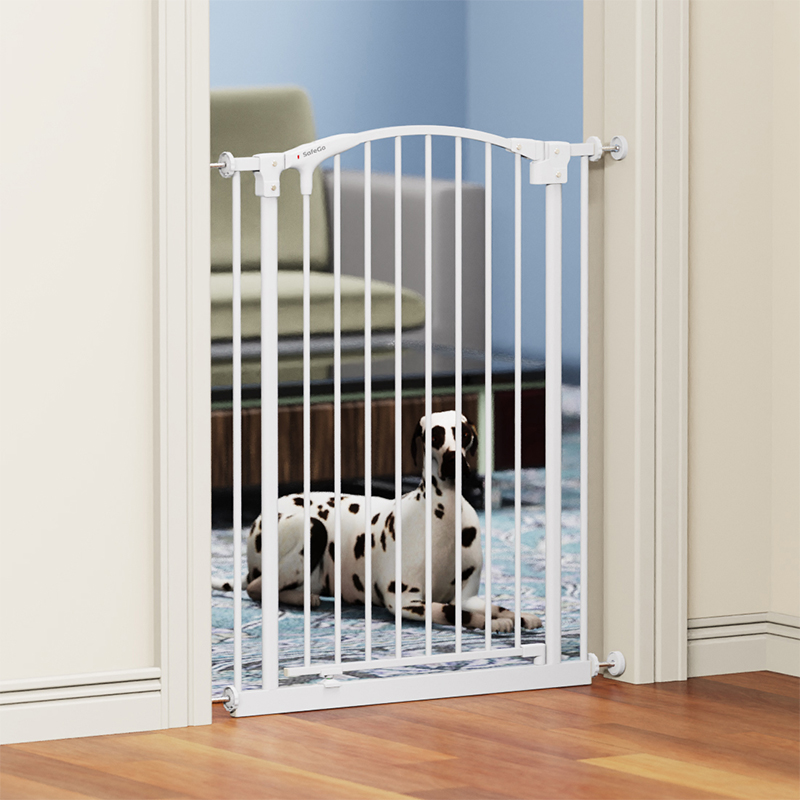
1. Origins: When Did the Extra Tall Pressure-Fit Pet Stair Gate Appear?
The concept of safety gates dates back to the mid-20th century, originally designed for infants and toddlers. The baby safety gates appeared in the 1960s and were often made of wood with simple locking mechanisms. As pet ownership increased and homes became more open in design, the same idea was adapted for pets.
The extra tall pressure-fit pet stair gate started to gain visibility in the late 1990s and early 2000s. Manufacturers recognized that larger dog breeds needed barriers higher than the standard baby gate height of about 75 centimeters. Gates over 90 centimeters tall began appearing in the market as a response to this need.
The pressure-fit system itself was not entirely new—it had been used for decades in child safety products—but applying it to taller gates made for pets was a practical extension. This design removed the need for screws or drilling, making installation easier and preventing wall damage, an appealing feature for both homeowners and renters.
2. Design Evolution: How Has It Developed Over Time?
Over the years, the extra tall pressure-fit pet stair gate has undergone notable design improvements. Early models were basic—tall metal or wooden frames that relied purely on friction for stability. However, as user expectations grew, the gates evolved in structure and usability.
Improved Stability: Modern gates now feature multiple tension points and reinforced frames to hold securely, even with active pets leaning or jumping against them.
Convenient Access: Walk-through doors with one-hand operation latches became a standard feature, allowing people to pass through without removing the gate.
Extension Panels: Adjustable width extensions were introduced to fit various stairway or hallway sizes.
Dual Lock Systems: To ensure safety, two-step locking systems were developed, reducing the chance of accidental openings by children or strong pets.
Today’s models combine function with user-friendly design, focusing on both durability and convenience. The core concept remains the same—pressure-fit installation—but the details have improved to suit modern households.
3. Material and Safety Improvements: What Has Changed?
The choice of materials and finishes has played a major role in the gate’s evolution. Earlier versions were wood or bare metal, which could show wear, rust, or splinters over time. As technology advanced, manufacturers began using materials that were both durable and easy to maintain.
Powder-Coated Steel: Many modern gates use powder-coated steel for strength and corrosion resistance. This finish also improves appearance and makes cleaning easier.
Plastic and Composite Options: Some lightweight models combine metal frames with plastic components for easier handling.
Surface Protection: Anti-rust and anti-corrosion coatings extend the gate’s lifespan, especially for use near kitchens, stairways, or humid areas.
Rounded Edges and Smooth Finishes: Modern gates prioritize safety by eliminating sharp edges and small gaps where paws or fingers could get caught.
The emphasis on safety and durability has transformed these gates from simple barriers into reliable home fixtures. Certification standards, especially in Europe and North America, have also guided product design, ensuring that pressure-fit mechanisms and height dimensions meet consistent quality and safety requirements.
4. Modern Applications: Why Is It Still Popular Today?
The continued popularity of the extra tall pressure-fit pet stair gate comes from its versatility. It serves a dual purpose: protecting pets from unsafe areas (like staircases) and keeping them confined when necessary without feeling restricted.
- For Large Dog Breeds: The extra height—often between 90 and 110 centimeters—prevents dogs from jumping over the gate, offering reliable containment.
- For Multi-Pet Homes: Families with both small and large pets can control access more effectively, keeping certain animals in or out of specific rooms.
- For Children and Pets Together: Many households use these gates for both toddlers and pets, providing a practical safety solution that fits multiple needs.
- For Temporary or Flexible Use: The pressure-fit design allows for easy relocation or removal, ideal for renters or families who move frequently.
Aesthetically, today’s gates are also designed to blend with home decor. Neutral colors such as white, black, or gray, along with smooth finishes, make them suitable for modern interiors without standing out as purely utilitarian objects.
Related products



Hangzhou Yiyuan Household Products Co., Ltd.
Product Center
Contact Us
- +86-15268686909
- [email protected]
- Room 1303, Tianyue Times Building, No. 750 Fengqing Road, Gongshu District, Hangzhou, Zhejiang, China
Copyright © 2025 Hangzhou Yiyuan Household Products Co., Ltd. All Rights Reserved.

Baby Safety Pen & Pet Gate Factory