
 Inquiry

 English
 Français
 Español
- Type:
- Industry News
- Date
- 2025-Oct-14
Industry News
Are Tall Pressure-Mounted Gates a Smart Economic Choice?
Are Tall Pressure-Mounted Gates a Smart Economic Choice?
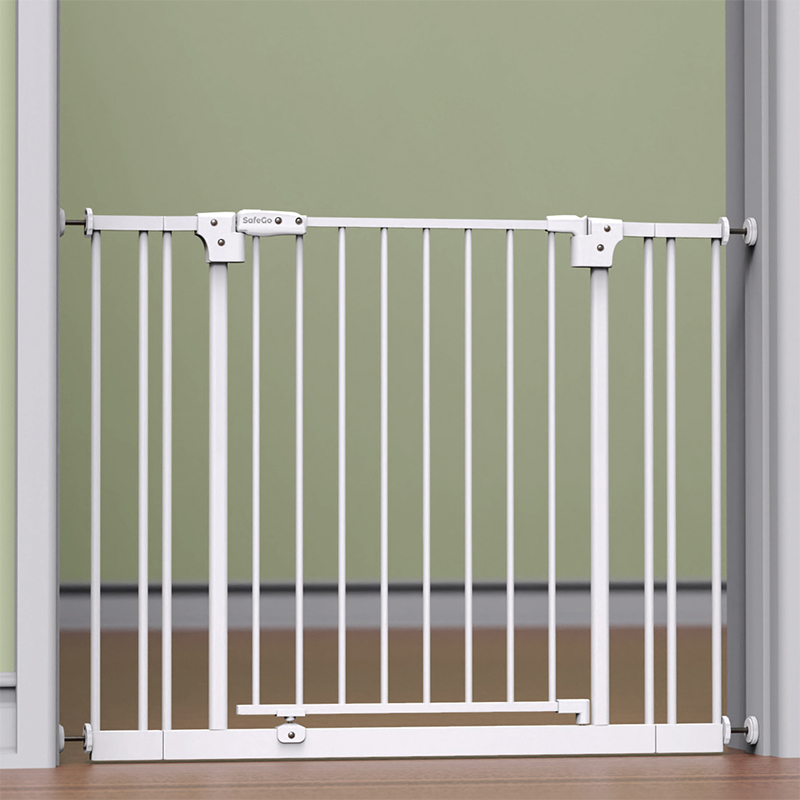
When securing your home for pets or toddlers, the choice of a safety gate often comes down to two types: hardware-mounted and pressure-mounted. While hardware gates are lauded for their strength, tall pressure-mounted gates present a compelling, and often overlooked, economic argument. Beyond the initial purchase price, their value unfolds across several areas, making them a financially savvy choice for many households.
The direct economic benefit is the lower initial investment. Pressure-mounted gates are generally less expensive to manufacture and, consequently, to purchase than their hardware-mounted counterparts. This upfront savings allows families to secure multiple areas of the home—like doorways and hallways—without a significant financial outlay.
These gates eliminate the risk of damage repair costs. Hardware-mounted gates require drilling into doorframes and walls, which can mean repairing holes, repainting, or even replacing damaged woodwork when the gate is no longer needed. For renters, this is a critical factor, as it prevents the potential loss of a security deposit. For homeowners, it preserves the pristine condition of their trim, avoiding future repair bills and maintaining property value.
The reusability and versatility of pressure-mounted gates also contribute to their long-term value. A single, adjustable gate can be used in multiple locations throughout a home and can even be moved to a different residence entirely. This "buy once, use everywhere" quality is more economical than purchasing several fixed-size gates for different openings. The ease of installation and removal encourages its continued use through different life stages, from a curious puppy to a toddling child, the return on a single purchase.
What are the Possible Defects of Pressure-Fit Tall Stair Gates in the Manufacturing Process?
While a well-made pressure gate is a great asset, the manufacturing process can introduce specific defects that compromise safety and function. Being aware of these potential issues can help you choose a higher-quality product and inspect it properly upon arrival.
- Inconsistent Telescoping Mechanism: The telescoping bars that allow the gate to extend must be machined to precise tolerances. A common defect is misaligned or poorly finished tubing, which can cause the sections to bind, stick, or fail to lock at the intended width. This an insecure fit or a gate that is difficult to install.
- Faulty or Weak Locking Knobs: The pressure knobs and the internal threaded rods they control are critical. Manufacturing flaws can include plastic knobs that are brittle and crack under torque, or threads that are stripped from the outset. A defective knob will not generate sufficient pressure to hold the gate securely, creating a tipping hazard.
- Inadequate Protective Padding: The foam or rubber padding on the pressure ends is vital for grip and wall protection. A manufacturing defect would be using a low-density, slippery foam that compresses too easily. This reduces friction against the walls, allowing the gate to gradually slip down, especially under the slight vibration of a household.
- Unreliable Latch Mechanism: The walk-through door latch is a complex assembly. Defects here can include plastic latch components that are molded incorrectly, a failure to fully engage. A misaligned latch might appear closed but not be securely locked, or the release button may stick, making it difficult to open.
- Structural Weakness in Tall Models: The increased height of a tall gate places more stress on the frame and its connection points. A key manufacturing defect is the use of frame materials that are too thin or weak to resist flexing. Poorly executed welds or rivets at the corners can also be a point of failure, causing the gate to wobble or collapse over time.
Related products



Hangzhou Yiyuan Household Products Co., Ltd.
Product Center
Contact Us
- +86-15268686909
- [email protected]
- Room 1303, Tianyue Times Building, No. 750 Fengqing Road, Gongshu District, Hangzhou, Zhejiang, China
Copyright © 2025 Hangzhou Yiyuan Household Products Co., Ltd. All Rights Reserved.

Baby Safety Pen & Pet Gate Factory